 Handcrafted in Canada
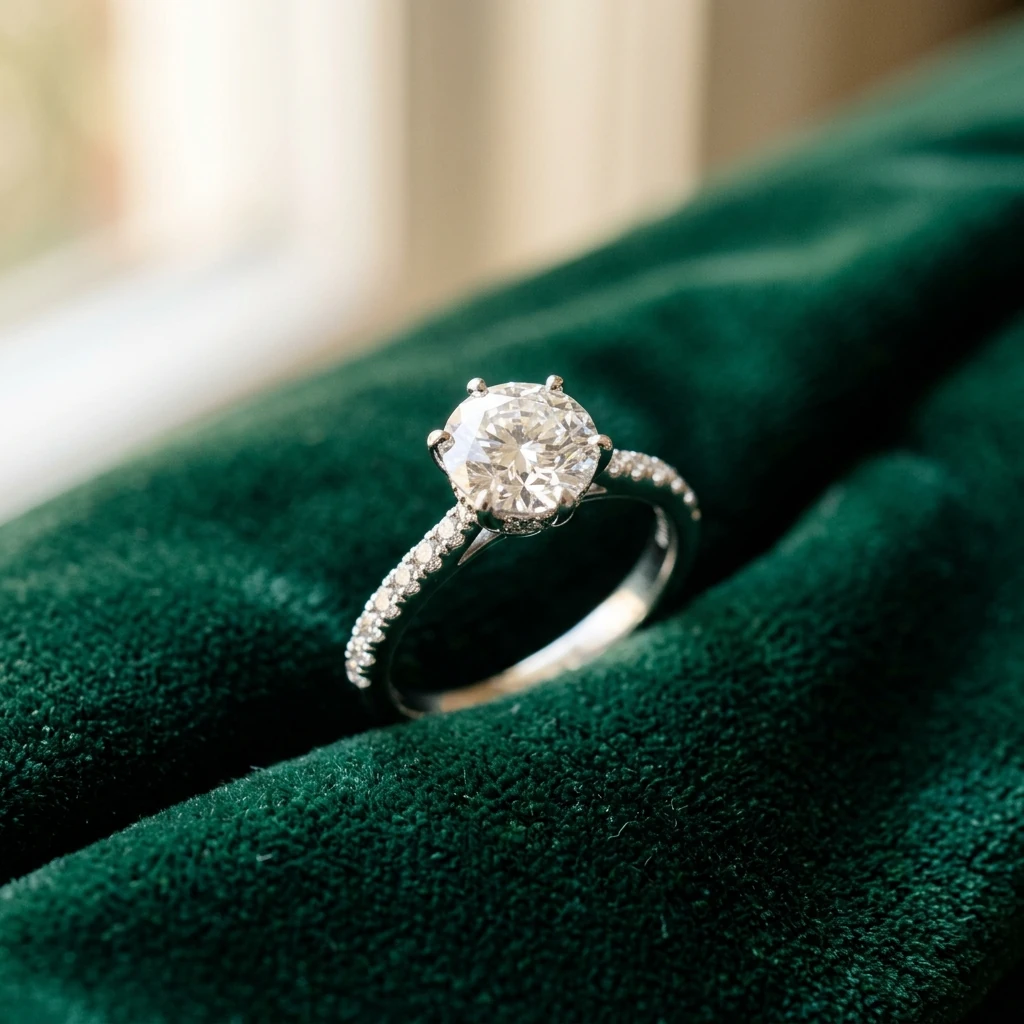
A ring can look almost identical in two photographs and feel quite different when you try it on. The warmth of the gold, the shape of the band and the way it sits beside another ring all contribute to that difference.
Choosing between 14K and 18K gold is part of that conversation. The higher number tells you there is more gold in the alloy. It does not, on its own, tell you which ring will suit you better.
For an engagement ring or wedding band, the useful question is how the metal works with the design you love, the way you wear jewellery and the budget you want to keep.
What is the difference between 14K and 18K gold?
14K gold contains approximately 58.3% gold, while 18K gold contains 75%. The remaining proportion consists of other metals that influence colour and physical properties. Both can be suitable for engagement rings and wedding bands.
You may also see 14K described as 58.5% gold or marked 585. That is a commonly used fineness: some 14K alloys contain slightly more gold than the mathematical 14-out-of-24 proportion. 750 denotes 75% gold, or 18K. The World Gold Council explains these purity measurements.
Here, karat describes gold content. Carat, when discussing a diamond, describes its weight.
| What you are comparing | 14K gold | 18K gold |
|---|---|---|
| Gold content | Approximately 58.3%; commonly also 58.5% | 75% |
| Yellow-gold appearance | Often a lighter yellow | Often a deeper, richer yellow |
| Material cost | Generally lower for a comparable design | Generally higher because of the greater gold content |
| Everyday wear | A practical option; performance depends on the alloy and construction | Also suitable for daily wear in an appropriate design |
| Most useful next step | Compare the actual colour, ring proportions and quotation | Compare the same details before deciding whether the difference matters to you |
Start with the colour you want to wear
If you are comparing 14K vs 18K yellow gold, look at the metal in person where possible. An 18K yellow-gold ring will often have a more saturated yellow appearance. A 14K version may feel softer in colour and easier to pair with jewellery you already own. Neither look is inherently more timeless; that is a matter of preference.
For rose gold, copper contributes the pink tone, but the precise blend determines the result. Do not assume every 14K rose-gold ring has the same shade, or that every 18K version will look alike.
With 14K vs 18K white gold, the higher gold content does not automatically produce a whiter ring. The alloy and surface finish matter. GIA’s guide to yellow, white and rose gold engagement rings explains how different metal mixtures create these colours.
Our suggestion is to compare samples beside your chosen stone and, if you have one, your wedding band. Look in more than one lighting condition. Photographs are helpful for narrowing your preferences, but screen settings and lighting can disguise subtle colour differences.
Consider the whole ring when comparing durability
It is common to hear that 14K gold is stronger and 18K gold is softer. That can be a useful starting point for some yellow-gold alloys, but it is too broad to settle every comparison.
Gold alloys can have different properties within the same karat. The comparison below shows how density, hardness and melting temperature vary between example yellow, white and rose-gold alloys. The karat stamp alone does not describe everything about how a finished ring will behave.
Explore 10K, 14K and 18K gold
Select a gold karat to compare example alloy properties.
10K goldApproximately 41.7% gold
| Colour | Density (g/cm³) | Vickers hardness (HV) | Melting range (°C) |
|---|---|---|---|
| Yellow | 11.32–11.47 | 128–135 | 804–896 |
| White | 10.99–11.17 | 158–178 | 935–982 |
| Rose | 11.52 | 122 | 949–971 |
14K goldApproximately 58.3–58.5% gold
| Colour | Density (g/cm³) | Vickers hardness (HV) | Melting range (°C) |
|---|---|---|---|
| Yellow | 12.84–13.05 | 134–165 | 788–938 |
| White | 12.53–14.37 | 125–204 | 902–1,185 |
| Rose | 13.03 | 136 | 932–982 |
18K gold75% gold
| Colour | Density (g/cm³) | Vickers hardness (HV) | Melting range (°C) |
|---|---|---|---|
| Yellow | 15.39–15.64 | 115–160 | 863–938 |
| White | 14.62–15.66 | 158–231 | 885–1,116 |
| Rose | 15.02 | 257 | 910–918 |
Illustrative ranges for selected alloys, not specifications for an individual Elysian piece. White-gold figures include different alloy families. Each column is an independent range, not a single alloy recipe. Hardness is one property, not an overall durability rating. Temperatures are rounded to the nearest degree.
The design deserves equal attention. When comparing two rings, ask about the band’s width and thickness, the setting’s height, the support around the centre stone and how an adjacent band will sit against it. A very slender band and a more substantial band are different design decisions even when they use the same gold.
For a pavé ring, look closely at the small-stone settings as well as the main band. For a solitaire, consider the prongs and the profile from the side. If you are still comparing settings, our guide to modern engagement ring designs explores those choices in more detail.
Whichever karat you choose, plan for sensible care. Remove rings before lifting weights or doing tasks that could knock or put pressure on the setting. Have a jeweller check signs of wear and stone security. No gold ring is scratchproof or maintenance-free.
Compare quotations without changing everything else
An 18K ring generally carries a higher material cost than a comparable 14K ring because it contains more gold. That does not mean the complete ring’s price rises by a fixed percentage.
The diamond or gemstone, amount of metal, setting work and design complexity also contribute to the quotation. To understand the difference, compare the same stone, ring size, band dimensions, metal colour and setting in both karats.
You may decide that the richer yellow colour of 18K is worth the difference. You may prefer 14K and use more of your budget for the stone or another design detail. Both are considered decisions when they reflect what you actually value.
Our engagement ring collection is a useful place to begin comparing designs before discussing the metal options for a particular piece.
Ask about the alloy if your skin is sensitive
A karat number is not a complete ingredient list. White-gold alloys, for example, can use different whitening metals, including nickel or palladium, as GIA explains in its white-metal guide.
Neither “14K” nor “18K” alone guarantees a nickel-free or hypoallergenic ring. If you have a known sensitivity, tell your jeweller which metal is involved and ask about the specific alloy before ordering. Do not rely on the gold percentage as your only guide.
Where does 10K gold fit?
10K gold contains approximately 41.7% gold. It offers another option when balancing the metal, design and overall cost. Its lower gold content does not make it gold plating: a solid 10K gold piece is made from a gold alloy throughout.
At Elysian Jewels, we work with solid 10K, 14K and 18K gold, including yellow, white and rose gold. We also work with 950 platinum. You can find our current material information in our jewellery FAQs.
For a custom ring, consider the metal alongside the proportions rather than choosing it in isolation. Our custom engagement ring process in Vancouver includes reviewing the design and CAD before production, so the band, setting and profile can be considered together.
Questions about 14K and 18K gold
Is 14K or 18K gold better for an engagement ring?
Both can be good choices. Compare the actual colour, alloy, construction and price. Choose 18K if its higher gold content and appearance matter to you; consider 14K if you prefer its colour or the balance it offers within your budget.
Can I wear 18K gold every day?
Yes, an appropriately designed 18K gold ring can be worn daily. Daily wear still calls for care: remove it for activities that could damage the ring and arrange inspections when the setting or stones need attention.
Does 14K gold look different from 18K gold?
Often, particularly in yellow gold, where 18K commonly looks richer. The difference in white or rose gold depends on the specific alloy and finish. Compare actual samples rather than relying only on a karat label or photograph.
Is 18K gold worth the extra cost?
That depends on your priorities. You are paying for a higher proportion of gold, but whether the colour and material choice justify the difference is personal. Compare otherwise equivalent quotations before deciding.
Is solid 14K gold the same as gold-plated jewellery?
No. Solid 14K gold is a gold alloy throughout the piece. Gold-plated jewellery has a surface layer of gold over another material. “Solid gold” does not mean pure 24K gold; it can describe a karat-gold alloy.
Choose the gold that feels right on your hand
The right choice should make sense when you see the ring, wear it and understand its construction—not only when you read the specification.
Explore our collection or book a free 30-minute consultation at our downtown Vancouver studio. We offer pressure-free guidance on diamonds, jewellery and the details of your ring, with no obligation to purchase.